Service
Termite Control
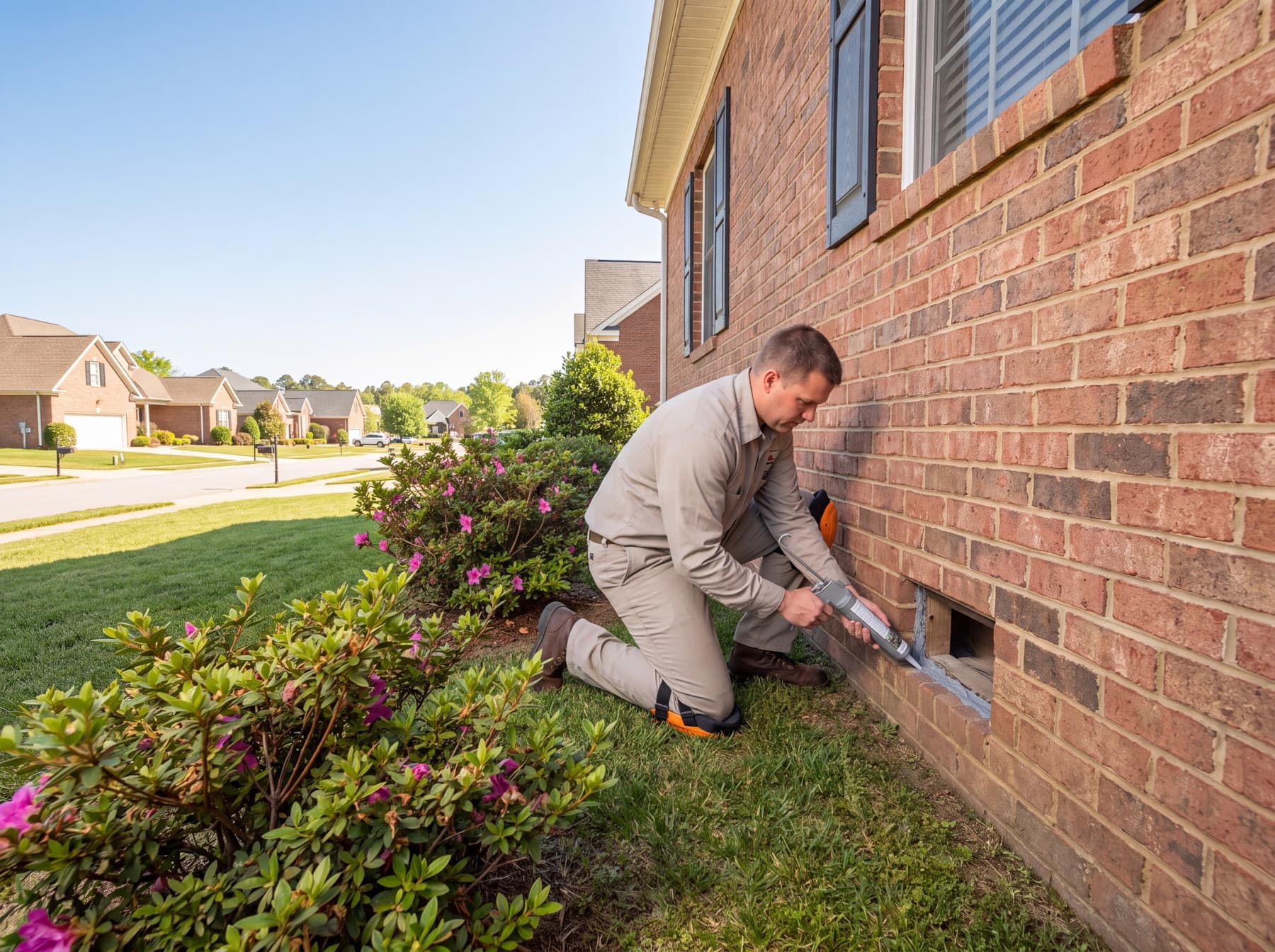
Termite inspection and treatment built around the Triangle's mix of century-old bungalows near downtown Raleigh and newer subdivisions farther out — liquid soil barriers, bait station monitoring, and pre-construction treatment for additions, all confirmed against real signs like mud tubes and damaged wood, not guesswork.
Termites do more dollar-for-dollar damage to North Carolina homes each year than fire and severe weather combined, and they don't care whether a house is a hundred-year-old bungalow near downtown Raleigh or a slab-built home that closed last spring in Wake Forest. The problem is that termites feed for months, sometimes longer, completely out of sight before a homeowner notices anything — so knowing the early signs, and knowing what actually stops them, is worth more than most people realize until it's their own house on the line.
How to Spot Termites Before They Spot You
The single most reliable sign is mud tubes — narrow, pencil-width tunnels of packed dirt running up a foundation wall, crawlspace pier, or exterior surface. Subterranean termites build these to move between the soil and their food source without exposing themselves to open air, so finding one is close to a confirmed diagnosis rather than just a hint.
A few other signs worth checking for around the house:
- Frass, small pellets the color and rough texture of sawdust or used coffee grounds, collecting near baseboards or windowsills — the calling card of drywood termites, which don't need direct soil contact the way subterranean termites do.
- Shed wings near doors and windows, left behind after a swarm. Termite swarmers break off their wings once they land to start a new colony, so a small pile of matching wings is often the first thing a homeowner actually notices.
- Wood that sounds hollow when tapped — trim, deck boards, structural framing. A papery or hollow knock instead of a solid one usually means the wood has been eaten from the inside.
- Doors that stick or floors that feel slightly uneven — subtle shifts caused by structural wood damage often show up this way well before anything is visible.
Brick construction, common throughout the older parts of Raleigh, doesn't offer the protection people assume it does. Brick veneer sits on a wood-framed structure, and mud tubes can travel up through weep holes or hairline foundation cracks entirely out of view until someone actually looks for them.
What Termite Treatment Costs
Total cost across the Triangle typically runs $225 to $2,500, with the treatment method being the biggest driver of where a job lands:
| Method | Typical cost |
|---|---|
| Liquid soil treatment | $500 – $1,500 ($3–$16 per linear foot) |
| Bait station system | $800 – $1,500 to install, plus $200–$400/yr monitoring |
| Whole-home fumigation (drywood only) | $2,000 – $8,000 |
Looked at over five years, liquid treatments tend to come out cheaper overall — roughly $1,200 to $1,500 total — compared with a bait system plus ongoing monitoring, which runs closer to $2,500 to $4,000 across the same stretch. Bait systems skip the drilling and trenching a liquid barrier requires around the foundation, though, which matters more on some properties than others depending on landscaping, patios, or driveways close to the house.
DIY Products vs. a Professional Treatment Plan
Store-bought termite sprays and stakes have a narrow use case: a small, localized drywood problem caught early, contained to something like a single piece of furniture. Beyond that, they run into the same wall every time — they only reach what's on the surface. A colony living in soil under a slab or tucked deep inside a wall cavity is untouched by anything applied at the surface, so a treated spot can look clear for weeks while the colony keeps feeding somewhere else in the house entirely.
Key takeaway
A DIY treatment that doesn't work costs more than the product itself — it buys the colony extra months to cause damage that can run into the tens of thousands. A professional treatment costs more up front but protects the structure for 5 to 10 years, which is the comparison that actually matters.
Licensed professionals have three main tools, chosen based on the termite species and how far the problem has spread:
- Liquid soil treatments build a continuous chemical barrier around the entire foundation, typically applying 100 to 300 gallons of termiticide at a controlled rate — the standard response for subterranean termites, which cause the large majority of termite damage across North Carolina.
- Bait stations (Sentricon, Trelona among the common brands) are placed around the property and monitored over time, letting termites carry bait back to the colony and eliminate it at the source instead of just repelling activity away from the house.
- Fumigation, or tenting, is reserved for widespread drywood infestations that have spread through the structure — the whole home is sealed and treated at once rather than targeting one accessible section.
How Long Treatment Actually Takes
The treatment appointment itself, inspection included, generally wraps up in under a day for a typical home. What takes longer is the colony actually dying off, and that timeline depends on the method. Liquid barriers start killing on contact within days and reach full effect across the colony within a few weeks. Bait stations work more slowly by design — 15 to 90 days is typical, and full colony elimination can take up to 6 months in some cases, since the whole approach depends on termites carrying bait back on their own schedule. Fumigation eliminates active drywood activity the fastest but requires the home to sit empty for 24 to 72 hours during the process.
Pre-Treating Before an Addition or New Build
Treating open soil before a slab gets poured is standard on new construction, and the same logic applies to an addition on an existing Raleigh-area home — a new sunroom, garage conversion, or slab extension opens a fresh path for subterranean termites if the ground underneath never gets treated. Doing it before framing starts is far cheaper and far less invasive than treating it later, which almost always means drilling through finished concrete to reach the soil below.
If a renovation or addition is on the calendar, it's worth confirming directly with your contractor whether termite pre-treatment is part of the scope or needs to be scheduled separately — this step gets missed easily during a renovation, and missing the window before the slab goes down means paying more to fix it afterward.
Frequently Asked Questions
What does it mean if I see flying termites swarming? A swarm of winged termites, especially in spring, is a strong sign of an active, established colony nearby — possibly already in or near the structure. Cleaning up the swarmers themselves doesn't solve anything; the colony that produced them still needs a full treatment.
How do I know if my brick house has termites? Brick veneer doesn't stop termites — it just hides the mud tubes better. Check weep holes along the base of the brick, hairline cracks in the mortar, and any spot where the foundation meets the brick line, since that's where tubes travel up unseen.
Does homeowners insurance cover termite damage? Almost never. Termite damage is classified as a preventable maintenance issue rather than a sudden or accidental event, so standard homeowners policies typically exclude it entirely. Ongoing prevention and a warrantied treatment plan are the real protection here, not an insurance claim.
Should I treat for termites before pouring a slab for a new addition? Yes — pre-treating exposed soil before the concrete goes down is the standard, cheaper approach. Treating around a finished slab afterward is possible but usually requires drilling into the concrete, which costs more and is more disruptive than doing it right the first time.
Where We Offer Termite Control
What Homeowners Look For
A few things customers consistently tell us matter most.
Frequently Asked Questions
Ready to get this fixed?
Call now or request a free estimate — we'll get back to you fast.